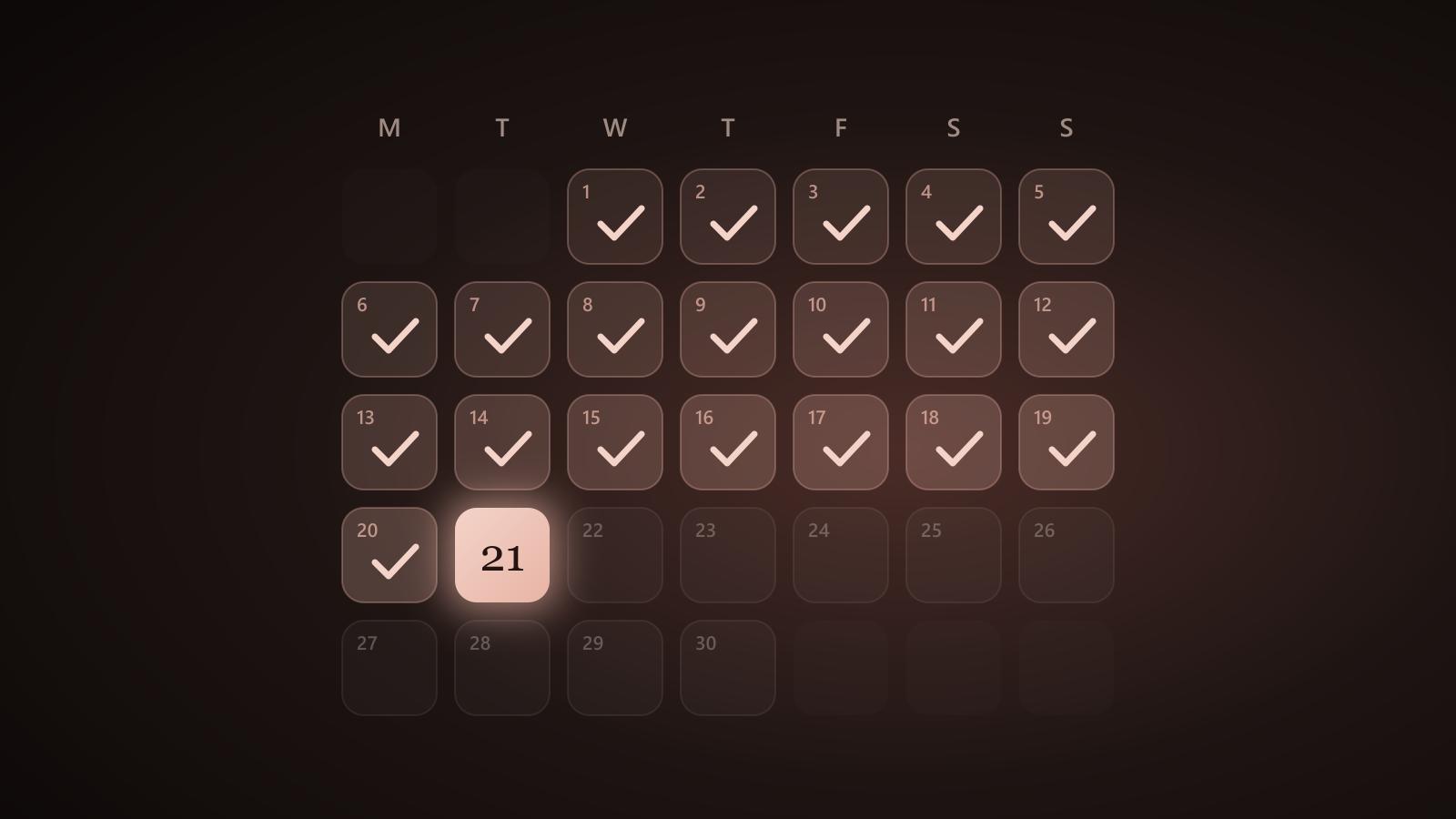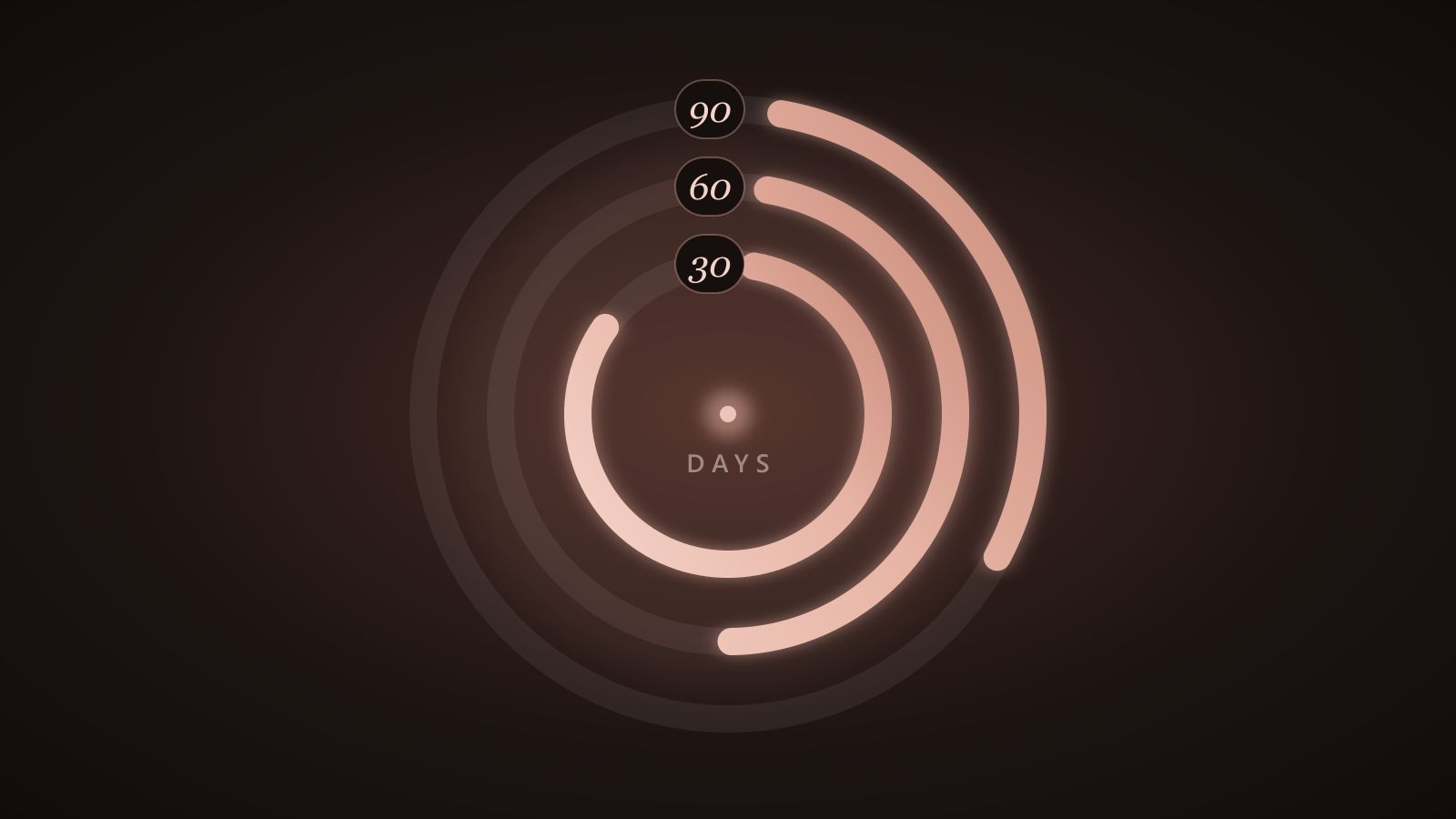
The short answer
- There is no proven magic number. We know of no study that has compared 30, 60 and 90 days of no contact against each other.
- A 30-day goal feels reachable, and you can renew it. 60 or 90 days gives more room after a long relationship.
- If you share children, work or a home, aim for low contact about logistics rather than a countdown.
- If the goal is to get back together, no length of silence can promise that. No contact works best as time for you.
- Set a goal, write down why you started, and decide now what you will do when you reach it.
How long should no contact last? Long enough that your days stop revolving around whether they texted. A common goal is at least 30 days, often 60 or 90, but there is no proven magic number. The right length depends on how long you were together, what you share, and what you’re hoping the time will do.
Here’s how the common goals compare, and how to pick one you’ll actually keep.
Is there a proven number of days for no contact?
No. We’re not aware of any study that has compared 30, 60 and 90 days of no contact to see which works best. Those numbers are popular, probably because they’re round, easy to track, and long enough to carry you past the first rush of wanting to reach out.
What matters more than the number is having one. A goal turns “I’ll try not to text them” into something you can count, and every day you count is a day you chose yourself. If you haven’t started yet, read our guide to the no contact rule first.
How long should no contact be after a breakup?
How long no contact should be after a breakup depends on your situation. This table is a starting point, not a prescription.
| Goal | What it gives you | Often suits | Watch out for |
|---|---|---|---|
| 30 days | A clear, reachable first goal that carries you past the first few weekends | A short relationship or situationship, or anyone who has slipped before and wants a win | Treating day 31 as permission to text |
| 60 days | Time for new routines to settle in | A relationship of a year or more, or an on-and-off one | Losing momentum in the middle weeks |
| 90 days | About a season, with plenty of “firsts” done without them | A long relationship, living together, repeated breakups | Feeling far away at the start; break it into smaller milestones |
| Open-ended | No date to count down to, so no deadline to wait for | When you know you don’t want them back, or the relationship was unhealthy | Feeling heavy; count up milestones instead of down |
| Low contact | Messages about logistics only | Co-parents, coworkers, a shared lease | Small talk slowly creeping back in |
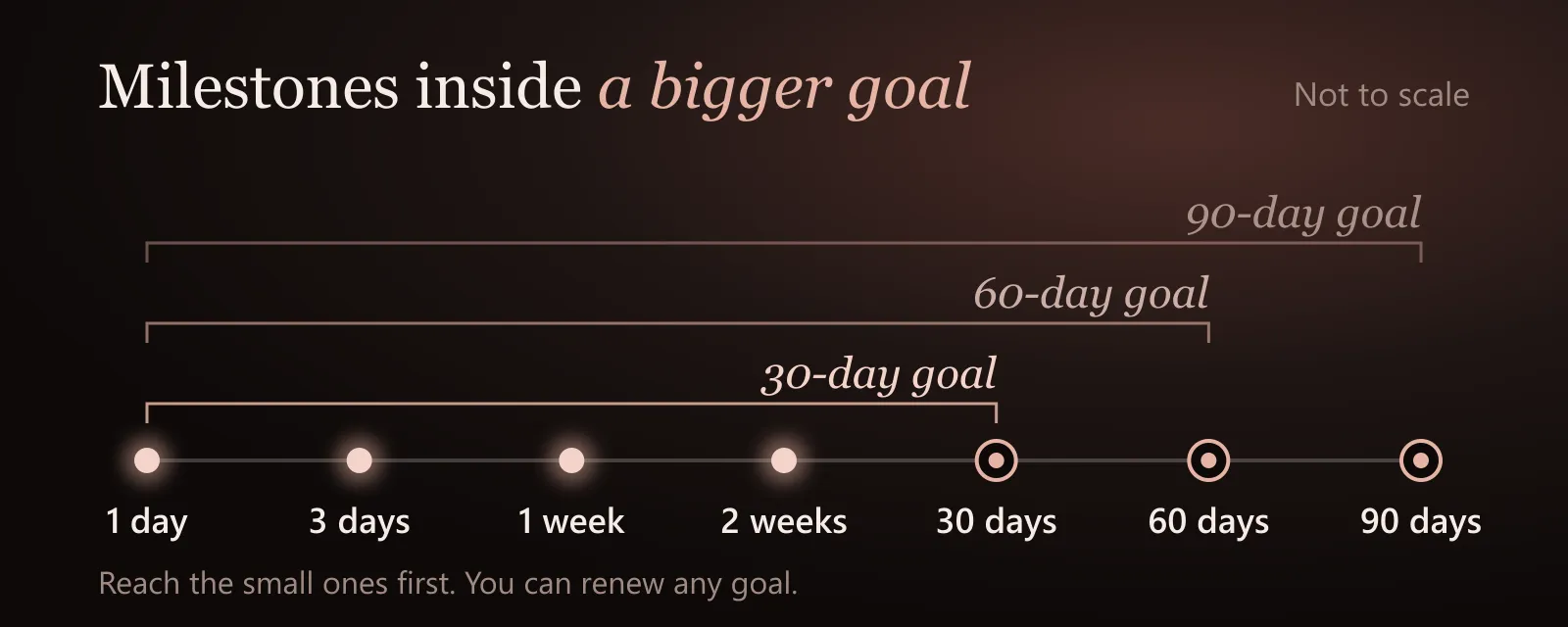
Illustration: small milestones sit inside every goal. Not to scale.
If your ex was controlling, threatening or abusive, no contact isn’t a countdown at all. It’s about staying safe, for as long as that takes. Our support page lists help lines, and if you are in danger, contact emergency services now.
Which length is right for you?
A few honest questions can point you to a goal:
- How long were you together? The more of your life you built around someone, the more routines need to change. A longer goal gives them time.
- Have you broken no contact before? If so, a shorter first goal you can actually reach may help more than a long one you abandon. You can renew it.
- Do you still check their profile? If you do, the days may feel longer. Muting their accounts makes any goal easier.
- Are you waiting for something? An apology, an explanation, a sign. If your goal is really “until they reach out,” it’s worth naming that, because it puts your progress in their hands.
- Do you share something you can’t avoid? Children, a workplace or a home mean low contact is the realistic aim. Keep it to logistics and keep it short.
How long should no contact last to get back together?
If you’re asking how long no contact should last to get back together, the honest answer is that no number of days can make that happen. Some couples do find their way back, and some don’t. No contact doesn’t cause either.
A lot of advice online sells silence as a strategy: go quiet for 30 days and they’ll miss you. The trouble is what that does to you. If the silence is for their benefit, you’re still checking whether it’s “working,” still watching their stories, still counting days for their reaction. That keeps you exactly where you were.
There’s a more useful way to use the time. Researchers found that people who repeatedly reflected on their breakup over several weeks developed a clearer sense of who they were apart from the ex, and that went with less emotional distress. That kind of clarity is worth more than any countdown. Use the time to ask what you’d actually want: not the person, but the relationship as it really was.
If, after your goal, you’re calm and you still believe there’s something worth a conversation, that’s a decision you can make with a clear head. It isn’t a prize for the days you served, and it doesn’t come with a guaranteed answer.
How do you set a no contact goal you’ll keep?
- Pick your start date. Use our free no contact day counter to see how many days you’ve done and your next milestone.
- Write down why you started. One or two sentences. You’ll want them on day 9 at midnight.
- Set small milestones inside the big goal. 1 day, 3 days, 1 week, 2 weeks. Small wins are easier to reach than a number far away.
- Decide now what happens at the end. Renew, stay out of touch for good, or reassess. Deciding while you’re calm stops you making that choice at a weak moment.
- Tell one person. Someone who will ask how day 20 is going.
- Have somewhere to put the urge. Writing helps. Our guide to writing an unsent letter to your ex has prompts to get you started.
The Unsent app puts this on your phone: a no contact timer that counts the days, hours and minutes, your goal and milestones, and the reason you started, kept where you’ll see it.
A message like that tends to show up right as you reach a milestone. Write it down, sit with it for a day, and ask whether you want to send it or want to want to.
What happens when you reach your goal?
Reaching your goal doesn’t oblige you to do anything. It’s a checkpoint. A few questions to ask yourself on that day:
- Do I want to reach out, or do I miss having someone? These feel the same and are not.
- What would I be hoping for? If the honest answer is “for them to say sorry” or “for things to go back to how they were,” consider whether the message could give you that.
- How do I feel compared with day one? If you’re calmer, that calm is worth protecting.
You can renew. If you slip before you get there, that happens too. Here’s what to do if you broke no contact.
However long you choose, the days count because you chose them. Start with one.
Sources
This article is general information written by the Unsent team, not therapy or professional advice. If you are struggling or feel unsafe, find a help line here.